


🍫 Grab a hot chocolate and take five minutes — your attention span deserves a treat. You’ll find our upcoming meetings by the end of this email.
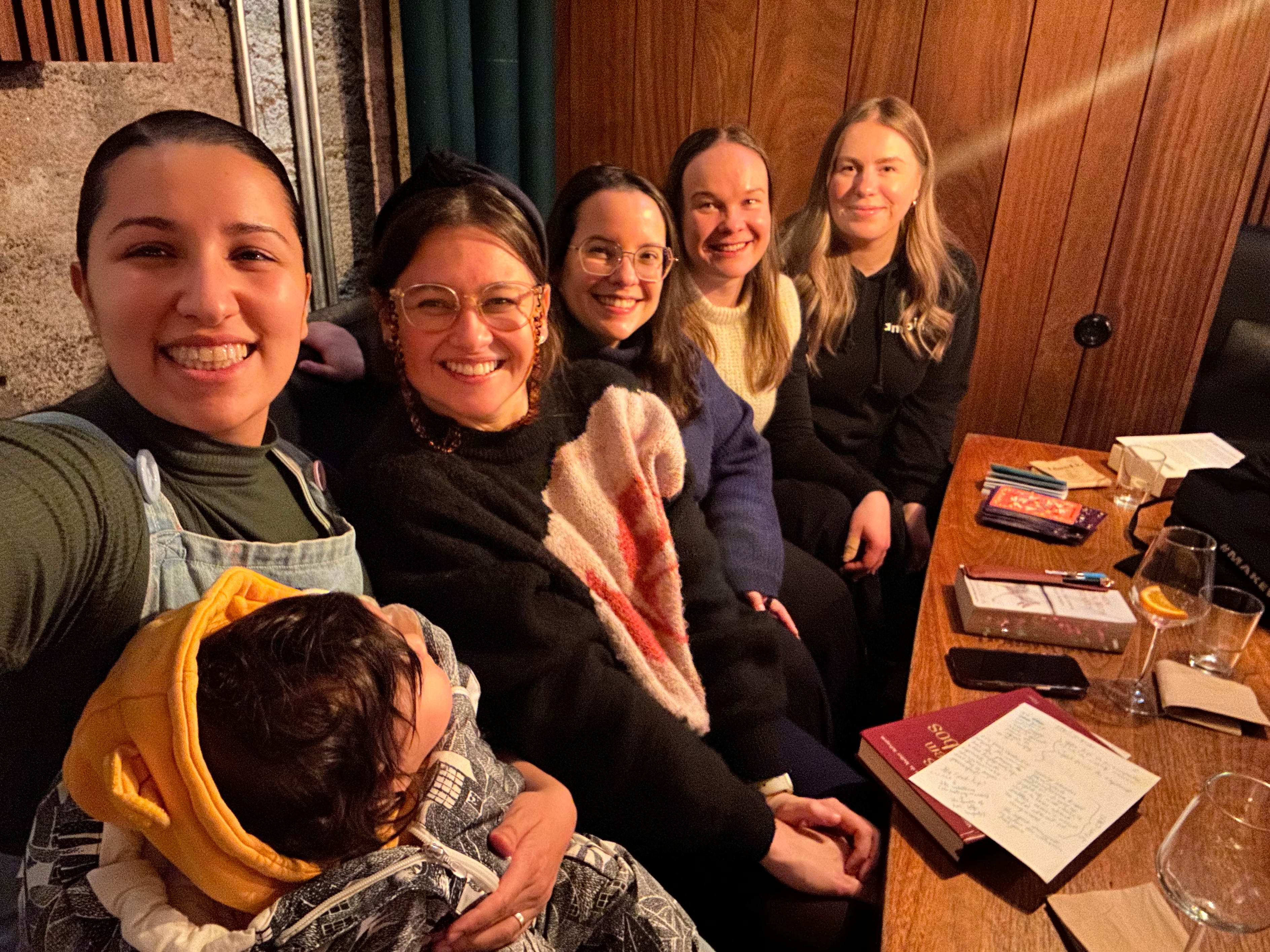
Hi Pearls! Yesterday we had the 8th meeting to discuss Women Who Run with the Wolves!
Some of us might have skipped some pages, but we made it. We had eight (!!!) meetings and went through many unsettling topics together, had emotional moments, dropped a few tears, and followed the urge to understand the traps life held for women.
We soaked up the learnings, we asked difficult questions, shared personal stories, and grew together. Some of us coincidentally (!) broke up from relationships that passed their prime.
We learned life is so much more than our personal experiences, and, more interestingly, how it can be so similar even in completely different scenarios just because we are women and the world repeats itself.
What a journey! Thank you to all who showed up!
Should you read Women Who Run with the Wolves, too?
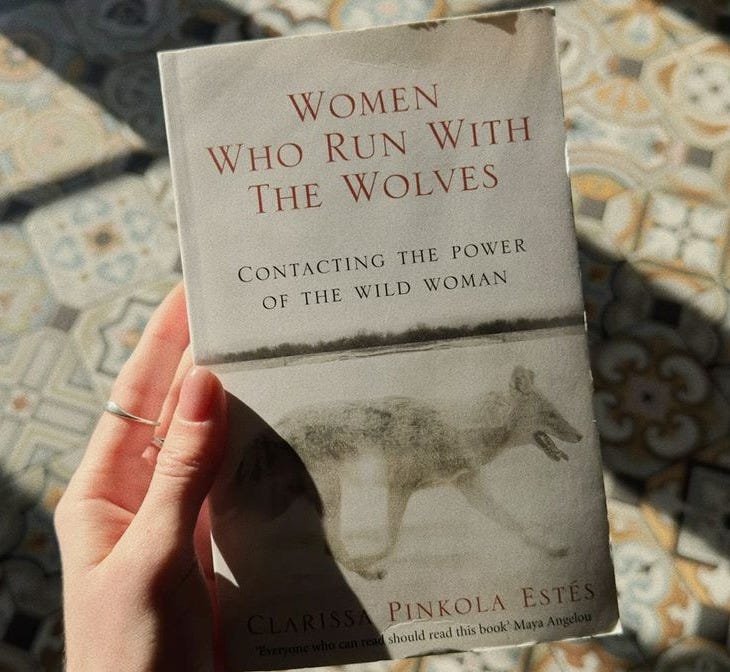
I was in a terrible, toxic relationship, feeling completely depleted. I knew something was wrong, but I didn’t have the strength to get out of it. When I touched this book for the first time, it became my life savior, the light at the end, and the ticket to Never Repeating Old Mistakes Land. I devour it, reading like a bible. I made notes, I journaled about it, and went on long walks by myself with a podcast about it in my ears.
An older friend advised me, “Tássia, you’re reading the divorce book”. I agree with her — it’s almost impossible to stay in bad situations after that. Women Who Run with the Wolves (1992) is like a friend who will advise you harshly when you’re deluded by passion, lust, tiredness, money, conveniece and all the other things our ego loves.
Women Who Run with the Wolves is a fabulous, annoying, and strange book to read.
Clarissa Pinkola Estés is a Mexican-American writer and Jungian psychoanalyst, and the WWRWTW, written in 1992, sold over two million copies. The book is almost like an oracle (I have to admit I used it as an oracle many times): it has 16 chapters, each one with a theme explained by folk tales, indigenous myths, or fairy stories. Maybe you recall some of them: Vasilisa and Baba Yaga (hello, Cinderella), The Seal Skin, The Soul Skin, Red Shoes, The Skeleton Woman, and many more.
After each story, Clarissa explains the symbols it carries and brings insights to our modern lives. It sound mistical when you don’t know that myths, fairy tales, and symbols repeat across cultures because they come from a shared human psychological layer, not coincidence. I have a feeling this is the reason why many people cringe over this book.
Along with the symbols, she brings the concepts of the instinctive, natural self born with us before rules, shame, or shoulds. It’s called wild woman because it’s self-regulated by instinct, not by external approval.
The reading is not the easiest — the book has technical concepts (archetypes, ego, predator, wild self, etc) and words, and might not be the most palatable if you’re used to romances like me. It won’t be the easiest to fully grasp if you’re not familiar with Jungian psychology, mythology & folklore, feminist cultural critique, and psychology in general.

Here are my most honest observations if you’re considering reading this book but aren’t sure yet. The reading below will take about five minutes and might be enough to help you decide if you’re curious about what this book is really about.
It’s not a smooth ride
This book brings complex concepts to light along with old folk stories, and the language is not the easiest (not too complicated either), but many of us reported zooming out and needing to read a paragraph many times. Plus, it’s heavy on notes that make all the difference for full immersion, and you’ll need to search things on the internet.
When you read a chapter that you can relate to, it’s easier to understand what she’s explaining. But if you never faced a similar situation — metaphorically, of course, because the old fairy tales can be quite scary — it’s hard to concentrate and to grasp what she’s saying. Regarding that, I think you don’t need to read the entire book at once; this is the book that you definitely should skip some chapters and read “on demand”. Reading it superficially can be a waste of time, but it’s a good thing to at least know what each chapter is about.
It’s emotionally unsettling
Clarissa doesn’t stay on the surface. The stories stir grief, anger, longing, and old memories— especially around womanhood, mothering, creativity, and lost parts that we might have forgotten. If someone is in a fragile emotional place or prefers light, comforting reads, this book can feel too intense.
We all have areas in our lives that could be changed, removed, or improved. If you’re living your best life with no regrets, guilt, or secrets, then you should be fine. Actually, you don’t even need this book.
People say that they feel “the calling to read WWRWTW,” and I think it is because we already know it has the power to pull the curtain and reveal what doesn’t belong in our lives anymore.
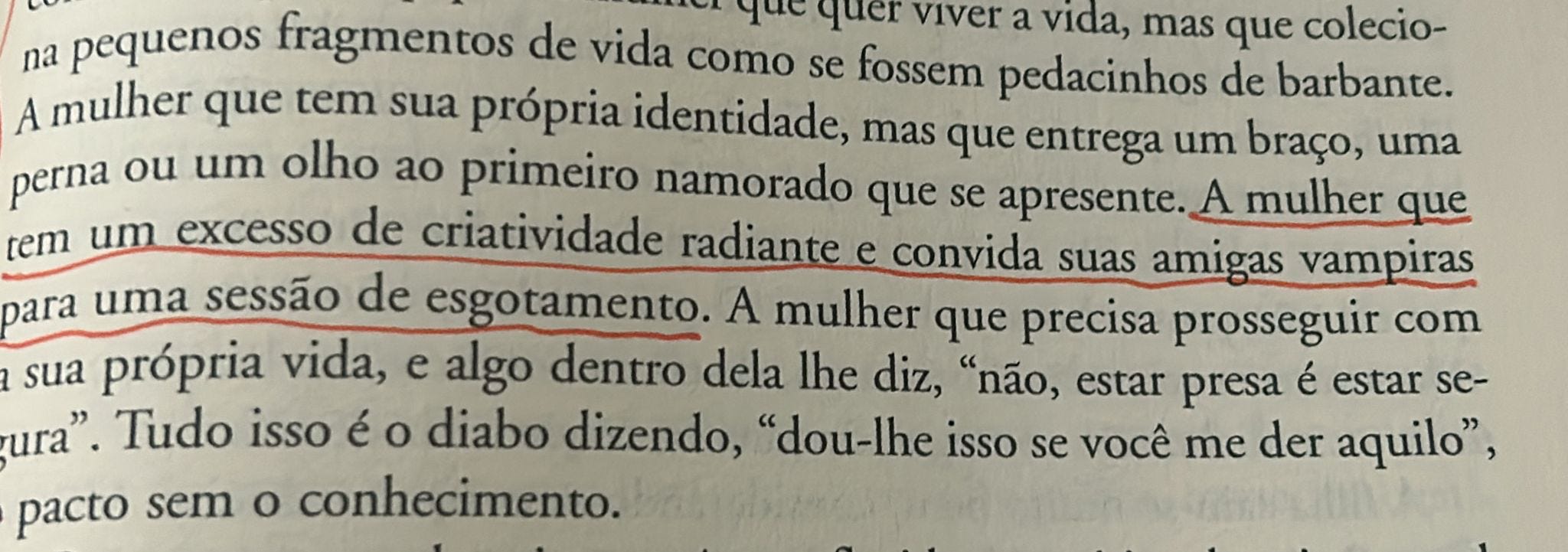
When I read the paragraph above (14th chapter), I could immediately point out exactly the wrong moves I’ve been making. She explains the entire story and the consequences so deeply that I just feel compelled to solve the matter. The problem is, they are not guided steps you can follow, and, just like Vasilisa, you might need to do hard things,s such as unfriend someone from your family, for example. Or divorce, or quit your job, or make a delation, reveal a secret. Expect the unsettling.
To me, it goes like this: I read the tale, then I relate to the characters. When the explanations come, I feel an urge to change radically so I’ll never go through the horrible things the character went through. I’ll stay awake, and I’ll pay attention to my Seal Skin, and no fisherman will steal it from me.
Radical changes are not always possible, though, and we’ll have to live knowing the heavy truth. So, if you’re not ready to find out things such as wanting to move to another place, restarting your career, quitting a job, or getting a divorce, don’t read it yet.
Sometimes, we know there’s something we should unravel, but we’re not ready to face it. If the truth will bring more anxiety than freedom, put this book back on the shelf.
It will take you deeper within yourself
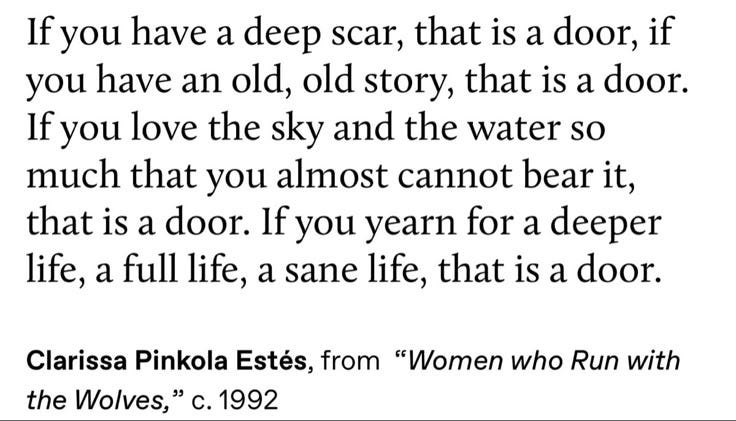
Are you too busy to challenge social conditioning? Read something else. WWRWTW will not only nudge your life, values, beliefs, and behaviours, but also your friends’. You’ll feel like taking a picture of a paragraph and sending it to a friend who needs to see that. I used to do it with my sister and my mom. Just recently stopped before they start hating this book.
Clarissa questions patriarchy, obedience, self-sacrifice, and the “good woman” archetype. For readers who are comfortable with traditional roles — or who don’t want to question family, religion, culture, or identity — it can feel confrontational or unnecessary.
We love to share our zodiac characteristics reels and to point out how something is so us. Our ego loves a confirmation that we are brave, innovative, or crybabies. If it’s something positive or softly points out our faults, then fine. We even share in our online profiles as a badge. Look at me, so Aquarius! You’ll see yourself and your family in this book many times, but I bet you won’t share it on your Instagram.
It will invite you to follow your soul's needs
It sounds woo-woo, and I love it.
The main goal of this book is to reveal what are the traps of the patriarchal society and how we can be strong enough to not only survive but also not to submit to a life that looks good on the surface but doesn’t make us feel whole.
This is a book for the wonderers who want to become the person they love to be, create a life they truly love to live, with no regrets, no buts, no what ifs. I’m not sure if it’s entirely possible, but at least it walks you through this direction.
The Wild Woman she mentions all the time is a version of ourselves connected to our instincts, intuition, and creativity. A version of ourselves that feels complete and connects with other people and the outside world in balance. It’s easy to write it down, but to become this woman, depending on how traumatized life made you, it’s a monumental job.
It doesn’t offer clear guidelines
There’s no structured guide on how to handle situations. The greatest value of reading Women Who Run with the Wolves is learning to observe what’s happening and becoming aware, with your ears up. You start seeing patterns more clearly because the book gives you frameworks, and life tends to repeat itself. If, like me, you’re a naive person who tends to trust everyone, this awareness is especially helpful so you’re no longer the easiest prey for predators.
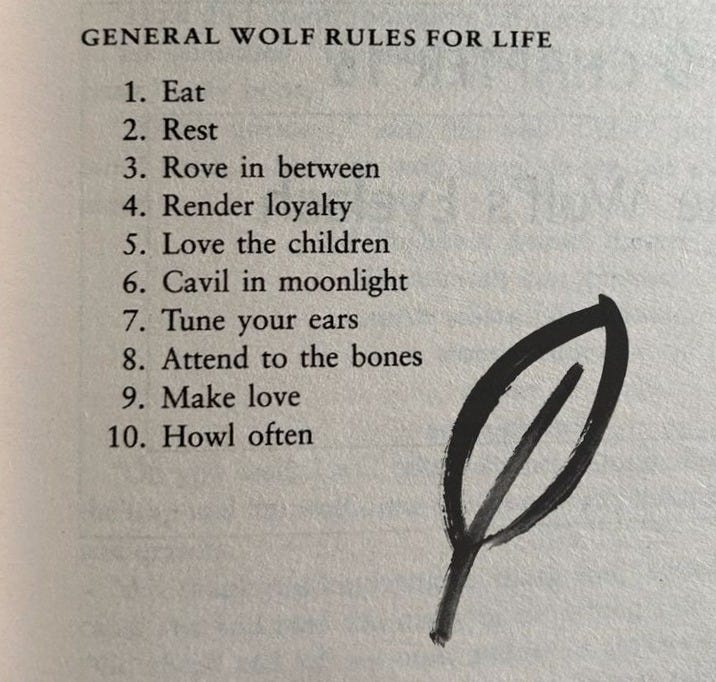
Despite not offering a step-by-step approach, she repeatedly emphasizes the importance of expressing ourselves through creativity. She encourages us to make our art regardless: write, paint, sew, make ceramics, collage, make music, dance, or do whatever makes your soul feel good. I believe we exist through our creations; they make us steadier, stronger, and more resilient. Just as going to the gym regularly makes your body stronger, creativity strengthens your soul.
“What is the basic food for the soul? Well, it differs from one creature to another. There are, however, certain combinations. Let us consider a psychic macrobiotic diet. For some women, air, night, sun, and trees are vital necessities. For others, only words, paper, and books can satisfy them. For still others, color, form, shadow, and clay are absolute requirements. Some women need to jump, bend, run, for their souls’ love dance. Still others want nothing more than the peace of leaning back against a tree.”
Clarissa Pinkola Estés
xoxo,
Tássia
P.s.: The Artist Way, by Julia Cameron, is a good practice to keep yourself tuned to your intuition and to your soul.

✺ Thursday, 22.01 at 18:00 — We’re hosting a Manifestation Board Workshop at one of the coolest spots in Helsinki — the Hobo Hotel bar — with pizza and wine. We’ll also have a little help from our friend Kelly Katajisto, who’ll bring a neuroscience lens to help us create vision boards that actually work.
✺ Sunday, 18.01 at 13:00 — We are taking the Pulkka out of our storage, and we’ll glide together! There’s no registration, just check our WhatsApp group or reply to this email.
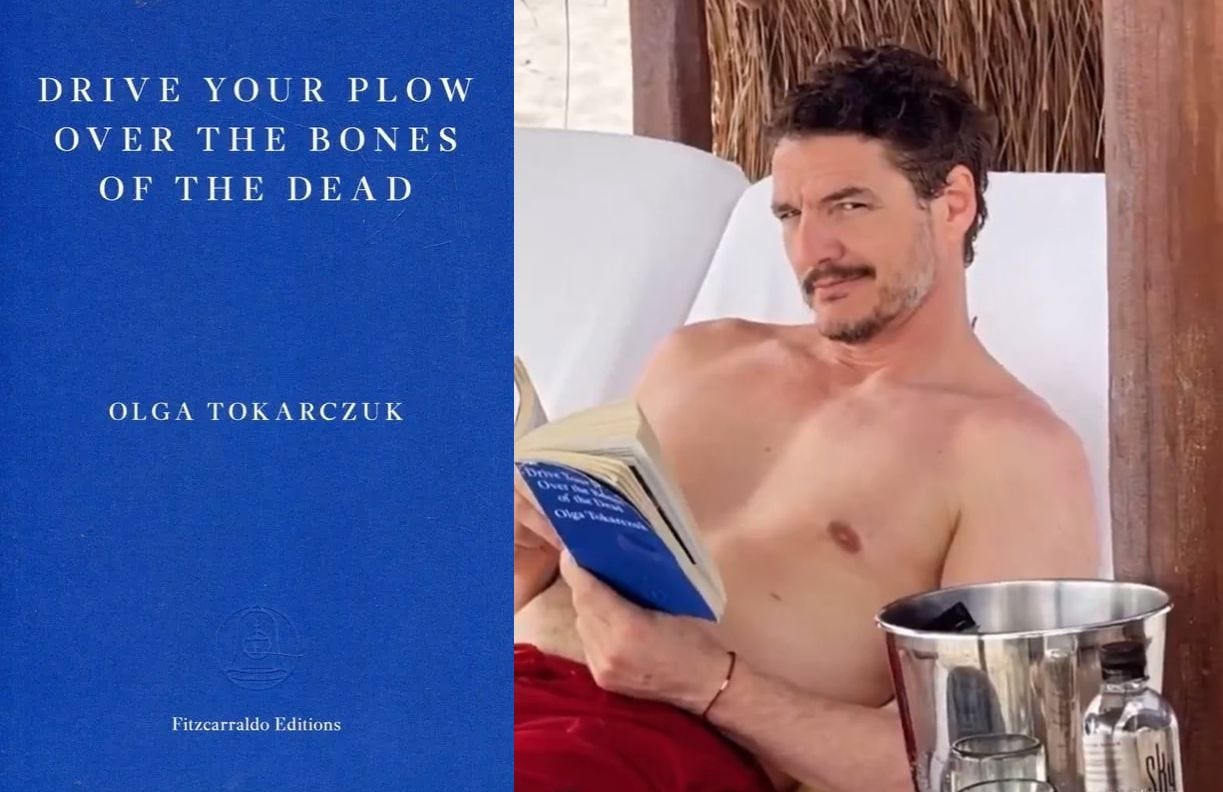
✺ Secret Book Club — We are reading Drive Your Plow Over the Bones of the Dead by Olga Tokarczuk. Place and time are still being decided. The date I have now is 18.02, but I’m having a hard time finding a place for us, so maybe we’ll push it to a Brunch on 21.02. But I’ll let you know asap.
It is one of my favorite books. All those stories, I can relate to most of them. It's a good book.
My feminine bible, my saviour goddess. My deathless seamstress echoing, always. Even my creative bible mentioned at the bottom. Women, I love you.